
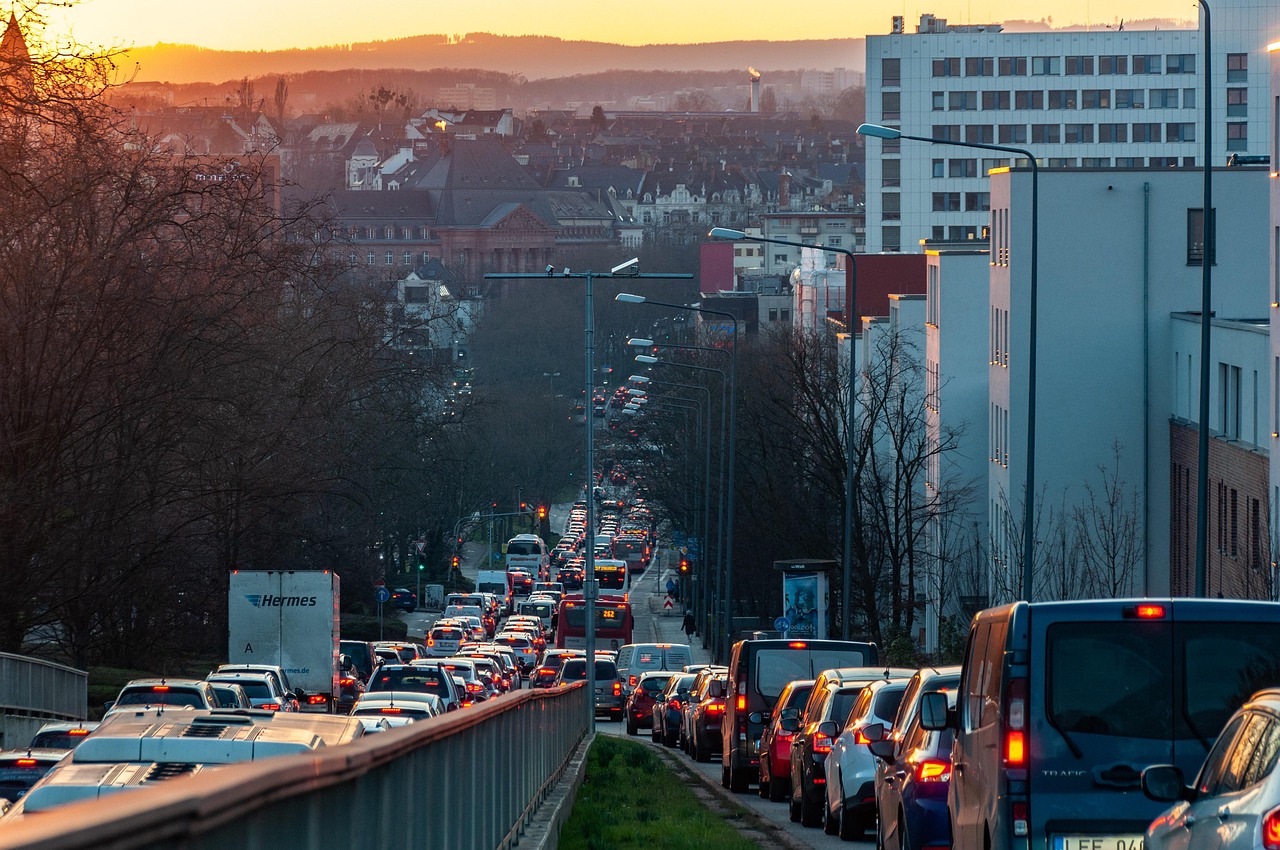
The infrastructure reality: what is happening on the corridors
The renovation of the DB rail network in Germany is the single most consequential infrastructure event for European automotive logistics in the current decade. Germany sits at the centre of nearly every major automotive rail corridor on the continent, between production facilities in Central and Eastern Europe and port hubs in Hamburg, Bremen and Bremerhaven, and between European factories and their distribution networks across Western Europe.
The ongoing renovation programme has reduced available freight capacity on the DB network by more than a third, with a restoration timeline extending well into the middle of the decade. For automotive shippers running regular block trains or single wagon flows through German corridors, this means that the planning assumptions built into their transport contracts may no longer reflect operational reality. A transport cycle that ran reliably on 24 hours may now run on 30 to 36 hours, with higher variability around that new baseline.
This situation is compounded by the labour challenge. According to the ECG State of Finished Vehicle Logistics on Rail in Europe, published in November 2025, 96% of ECG members have serious concerns about labour shortages across all transport modes. Europe's rail sector was short more than 300,000 workers in 2025. When a train runs late and loading teams have already been reassigned to the next task, the consequences of that delay extend well beyond the delay itself.
The contracted rate is only part of the picture
Transport budget reporting in automotive logistics tends to focus on the contracted rate, the negotiated price per train or per wagon movement. This is the most visible and controllable element of rail freight cost. It is also, in complex multimodal environments, the least revealing one.
According to the ECG and PwC Austria FVL Rail Cost Index, the index reached 132.7 in the second quarter of 2025, representing a cumulative increase of 32.7% since 2019. That trajectory is not reversing. But even that figure only captures the contracted rate side of the equation. The actual cost of rail freight in an automotive flow includes a series of expenses that either never appear in the transport line item or appear late and in fragmented form.
Invoice verification is one of the clearest examples. In a flow involving a railway undertaking, a logistics service provider and a wagon lessor, the gap between what was contracted, what was actually executed and what is subsequently invoiced is rarely zero. Most automotive shippers lack an independent data layer to verify invoices against actual performance. They rely on information provided by the parties whose invoices they are checking.
Penalties are another category. When a train is cancelled, when a wagon sits at a customer location beyond its agreed return window, or when liability for a delay is genuinely ambiguous across multiple parties, the cost tends to be absorbed rather than contested. Not because shippers are complacent, but because contesting requires precise event data that most planning environments do not retain in a usable form.

The cascade effect of a single delayed train
The operational consequence of a delayed automotive train is rarely proportional to the delay itself. A train that arrives two hours late at a compound does not simply shift the schedule by two hours. It triggers a sequence of secondary costs that spread across multiple teams, multiple P&L lines and sometimes multiple organisations.
The loading team mobilised for the planned arrival time stands idle or is reassigned. If reassigned, the next scheduled departure may not reach the minimum VIN count required by the carrier contract, triggering a dead freight charge on capacity already paid for. The remaining vehicles move by road instead, at spot rates, at short notice, at a price that reflects the urgency. Working capital stays tied up longer than planned, and dealer delivery commitments shift.
The total cost of a two-hour delay, properly traced across all its downstream effects, can be a multiple of what the delay fee line in the contract specifies. And yet, according to Everysens network data, 44% of trains across European automotive and industrial rail flows ran late in 2025, up eight percentage points from the previous year. Wagon immobilisation stands at 44%, unchanged from 2024.
These are not numbers that resolve on their own.
What the organisations managing this effectively are doing differently
The organisations that navigate this environment most effectively have made one structural shift: they track at the VIN level rather than at the aggregate train level. Knowing which vehicle is on which wagon, on which service, with what real estimated arrival time not a carrier estimate but a data-derived prediction allows a planning team to begin managing the downstream consequences of a delay before the train arrives.
They have also built an independent invoice verification layer. Rather than relying on the logistics service provider portal as a control tool, they compare what was contracted, what was executed and what was invoiced systematically, before payment. The gap is rarely zero.
And they plan the rail and maritime connection as a single flow, with a forward view of wagon availability by site and wagon type, so that decisions on loading, repositioning and mode switches get made in advance rather than under pressure.
This is precisely what Everysens was built to address. The Everysens platform gives automotive and industrial shippers a real-time, VIN-level view of their rail flows, an automated invoice control layer and a 30-day forward forecast of wagon availability through SWIF so that the costs that currently sit outside the transport line item become visible, measurable and manageable.
Learn more about how Everysens works: Optimising rail freight transport and 10 essential KPIs for rail transport.
What 2026 requires
The conditions shaping European automotive rail freight in 2026 such as rising costs, degraded corridor reliability, labour shortages, growing multimodal complexity, are unlikely to resolve quickly. The FVL Rail Cost Index trajectory, the DB renovation timeline and the structural labour market in European logistics all point toward a sustained period of pressure.
For supply chain directors managing finished vehicle logistics across European corridors, the question is not whether these conditions will affect operations. It is how much of the cost will be controlled and how much will be absorbed.
The organisations that are building the data foundations now, at VIN level, with independent invoice verification, with a forward view of wagon availability, are the ones that will have the clearest picture of what rail is actually costing them. And that clarity, in the current environment, is a meaningful competitive advantage.
The 2026 automotive rail freight benchmark is available for download.
It covers the market forces reshaping finished vehicle logistics on European rail, what Everysens network data reveals about corridor performance, and what the leading shippers are doing differently.


