

Forecast the resources your train depends on,
before you commit it.
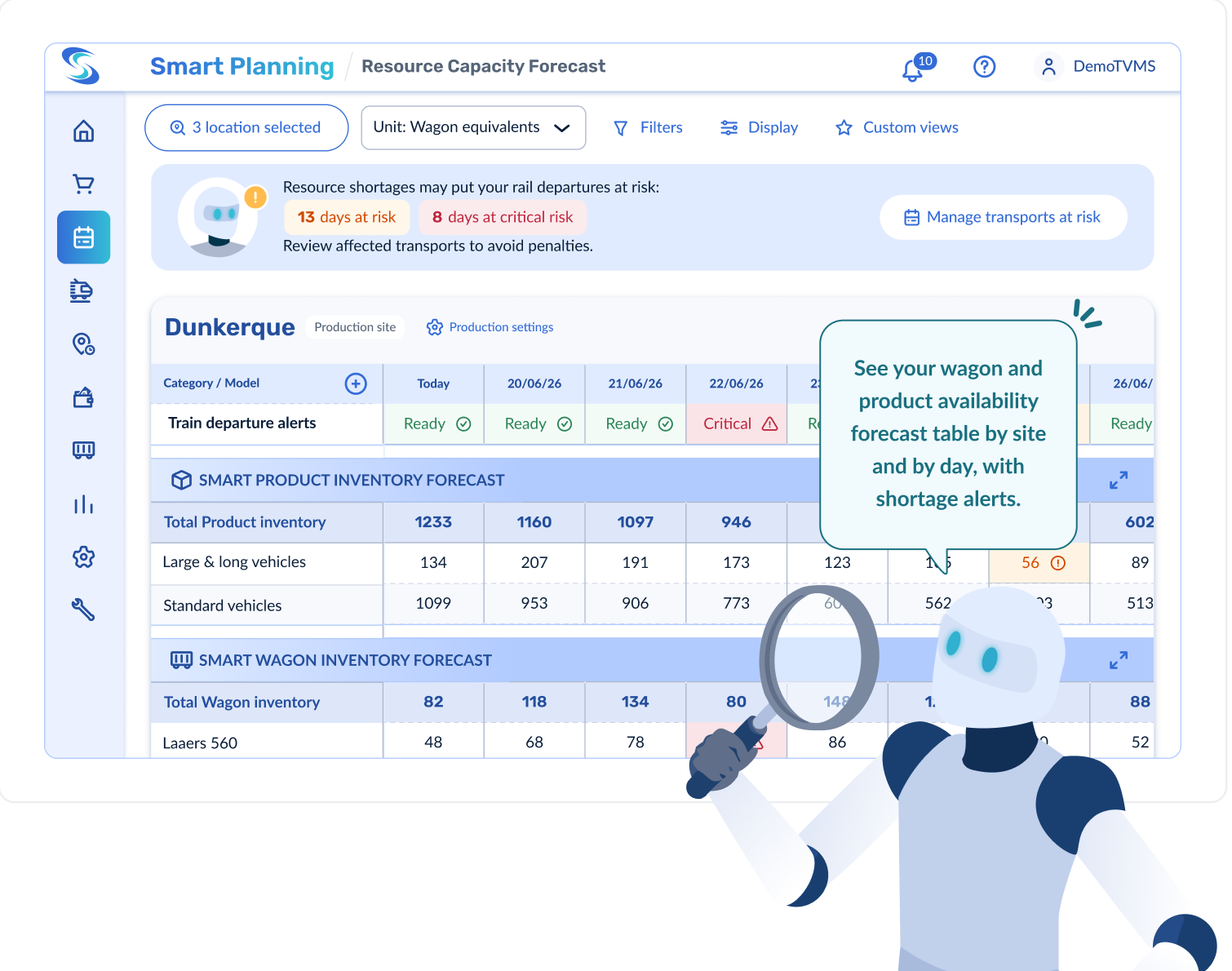
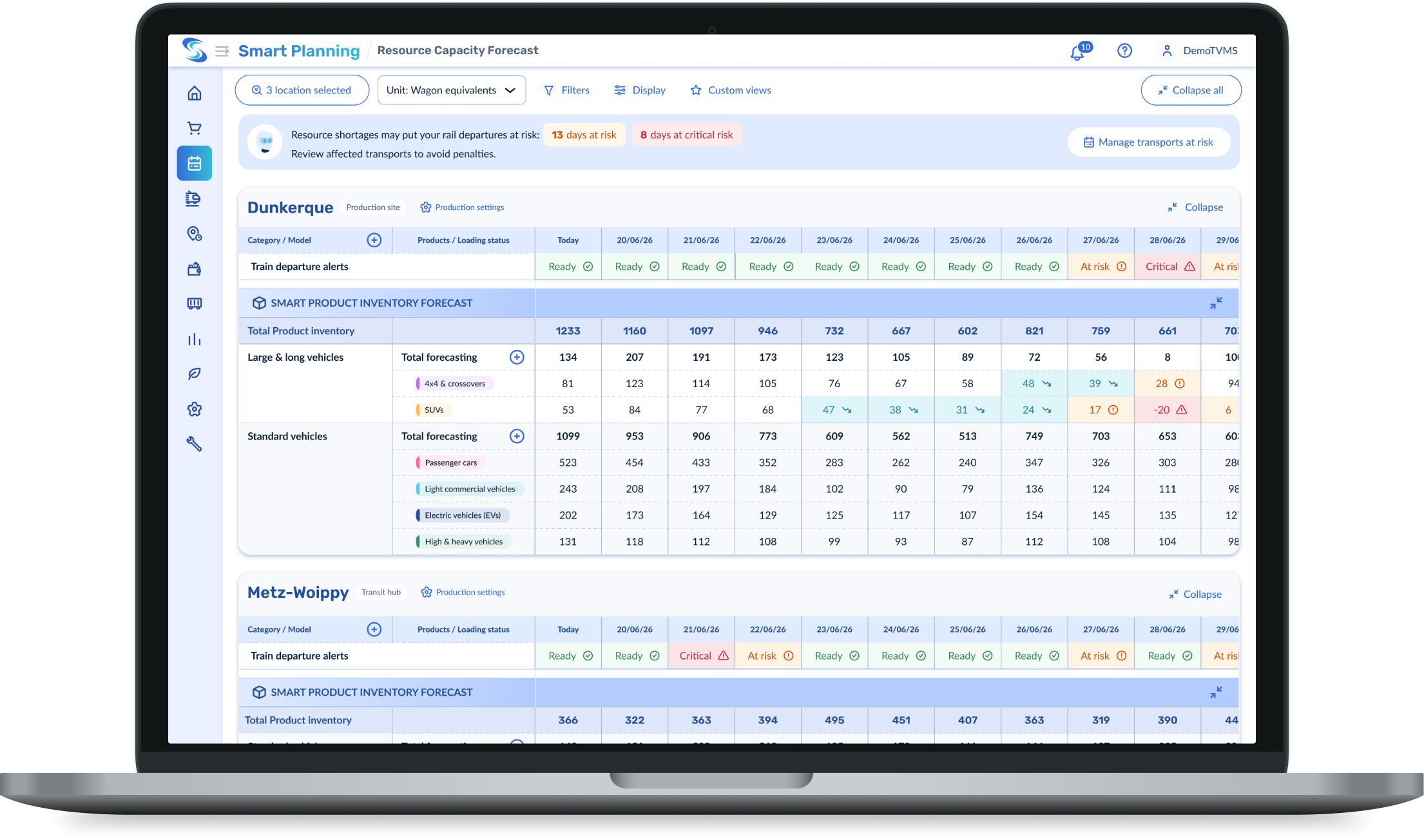
Resource Capacity Forecast (RCF) tells you how many wagons will be available at each site, and how much product will be ready to load, up to 30 days ahead. And because it sits inside your planning, it shows you which transports and which customers a shortage would hit, and what you can still do about it: reschedule, simulate another plan, or secure the capacity you are missing.
See the shortage coming, days or weeks before you commit the train
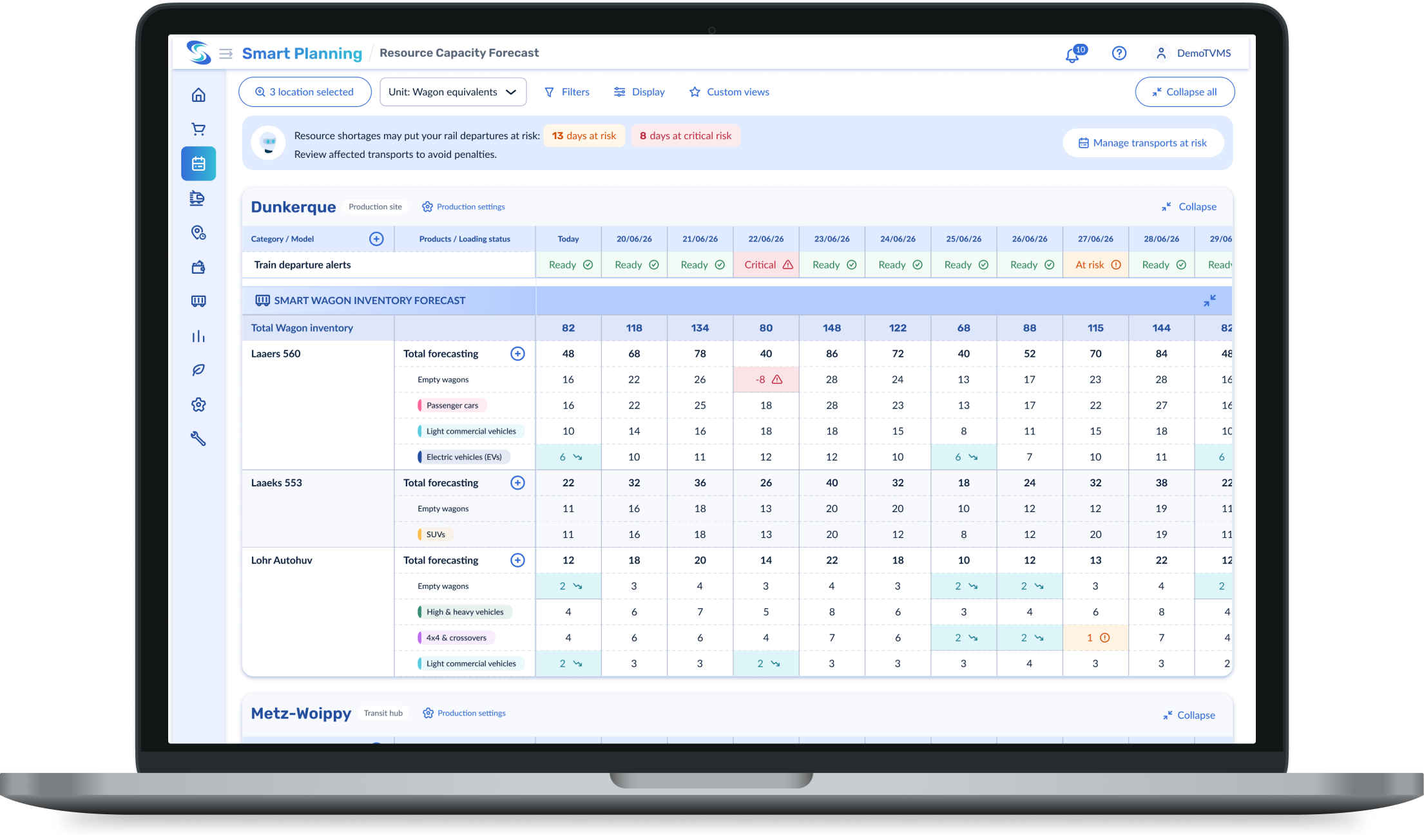
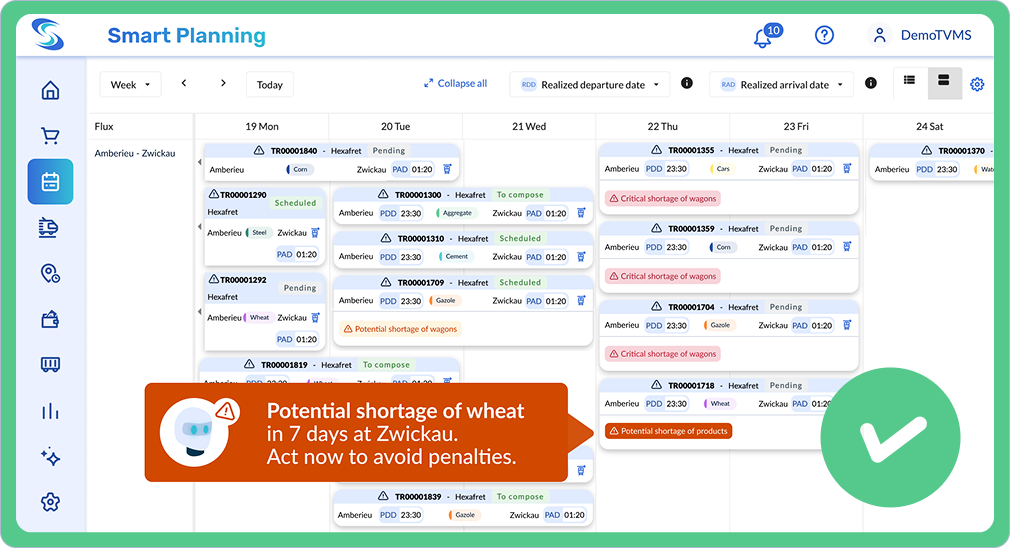
This is what your planners see every morning:
A clear forecast of wagons and products across your sites, the transports and customers a shortfall would affect, and the levers to act in time, reschedule, simulate another plan, or secure the capacity you are missing.
What changes when capacity
stops being an assumption

Rail planning is full of moving parts.
A few of them cost more than the rest.

Which forecast are you missing?




From scattered signals to a plan you can trust
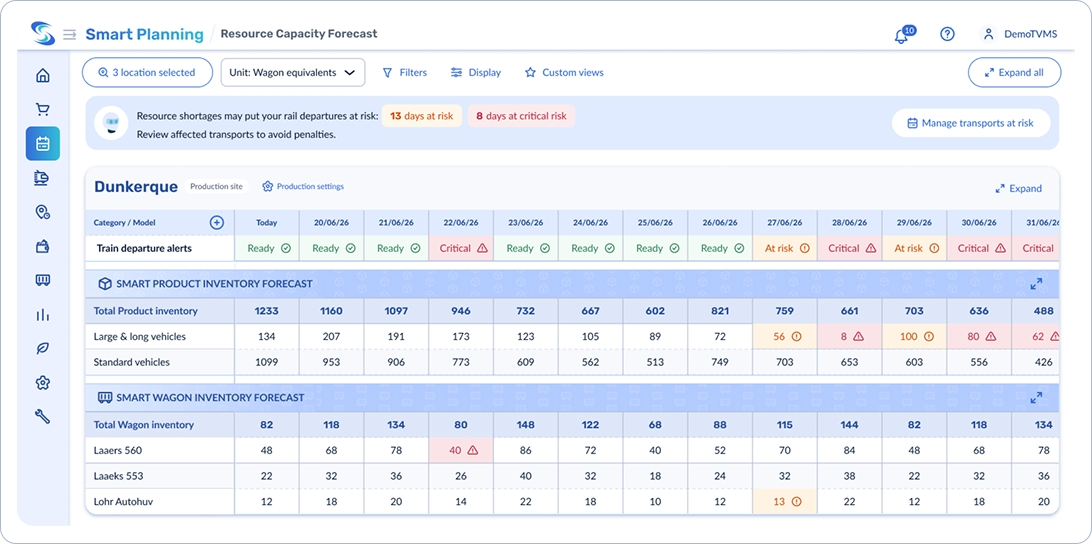


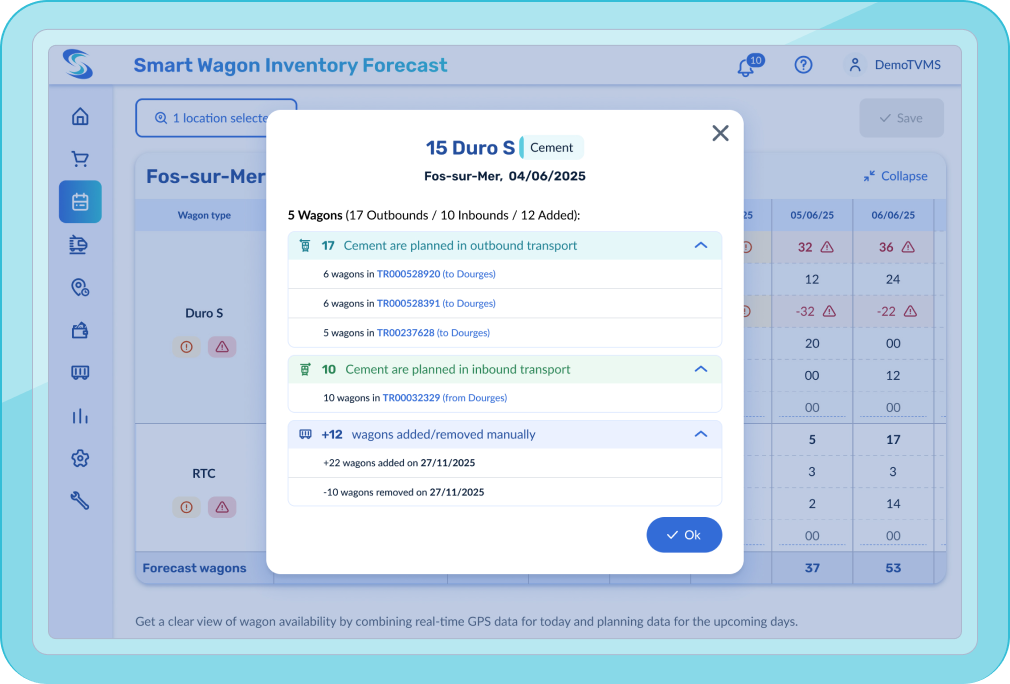
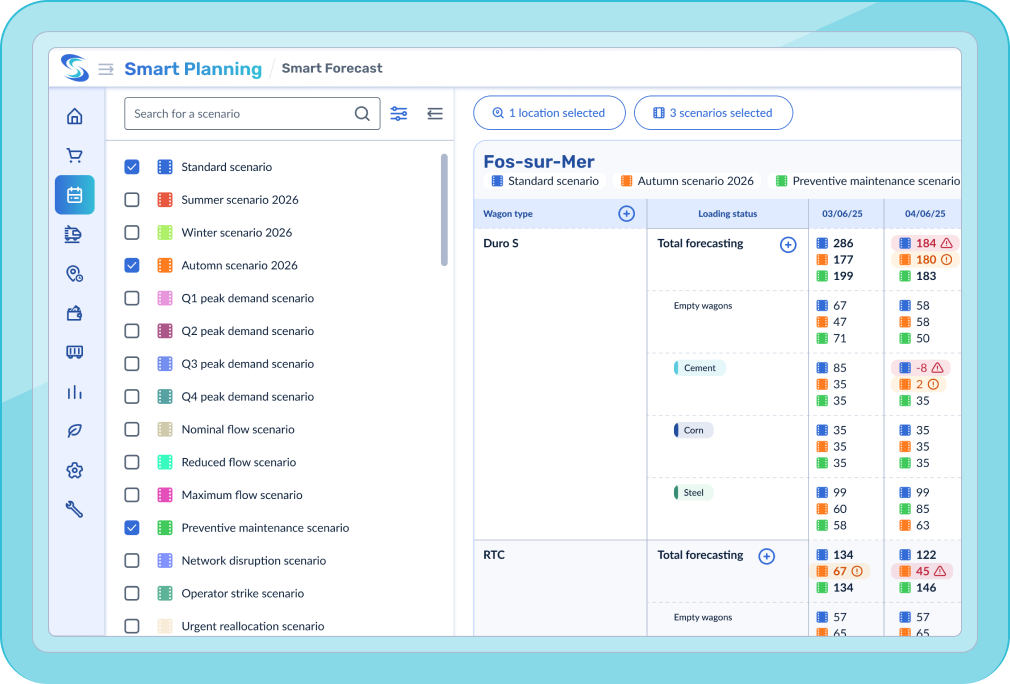
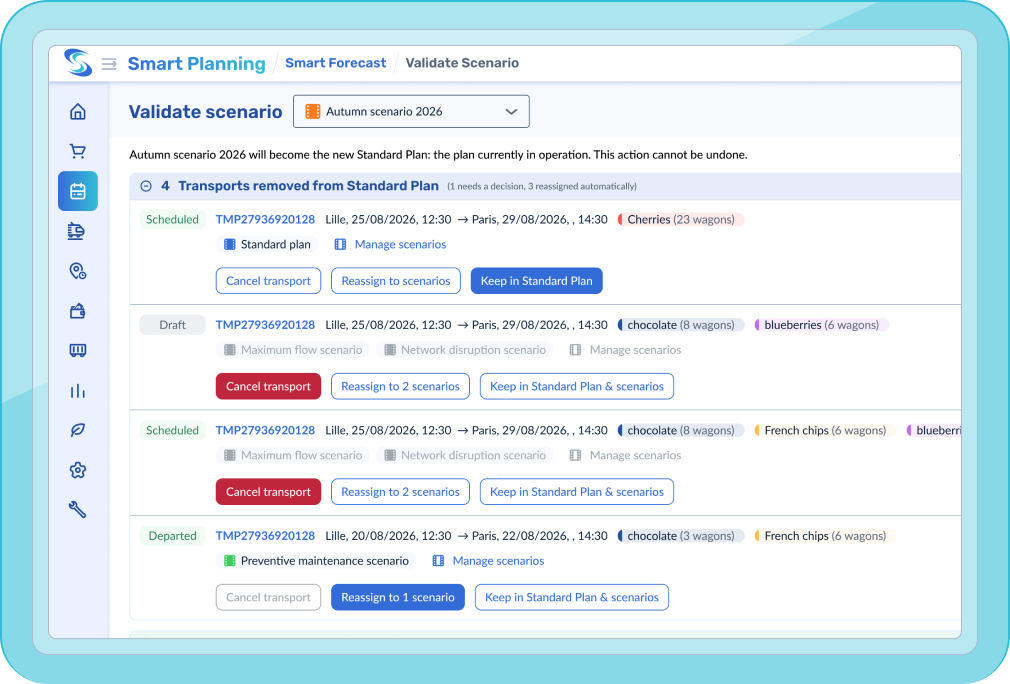
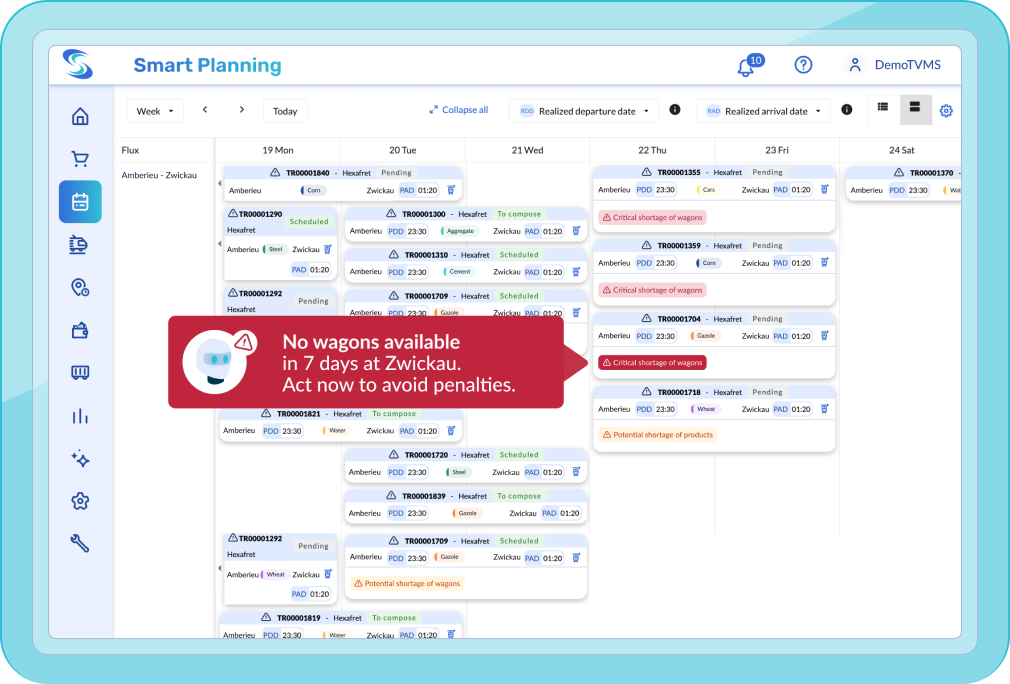

Smart Wagon Inventory Forecast (SWIF)


Smart Product Inventory Forecast (SPIF)
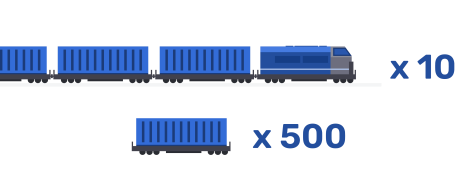
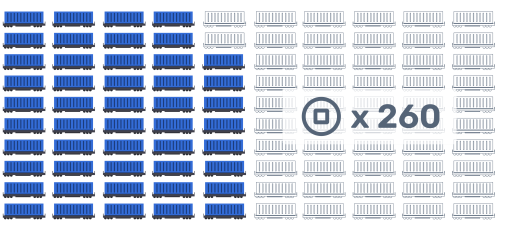
What this looks likeon a site loading 10 trains a week
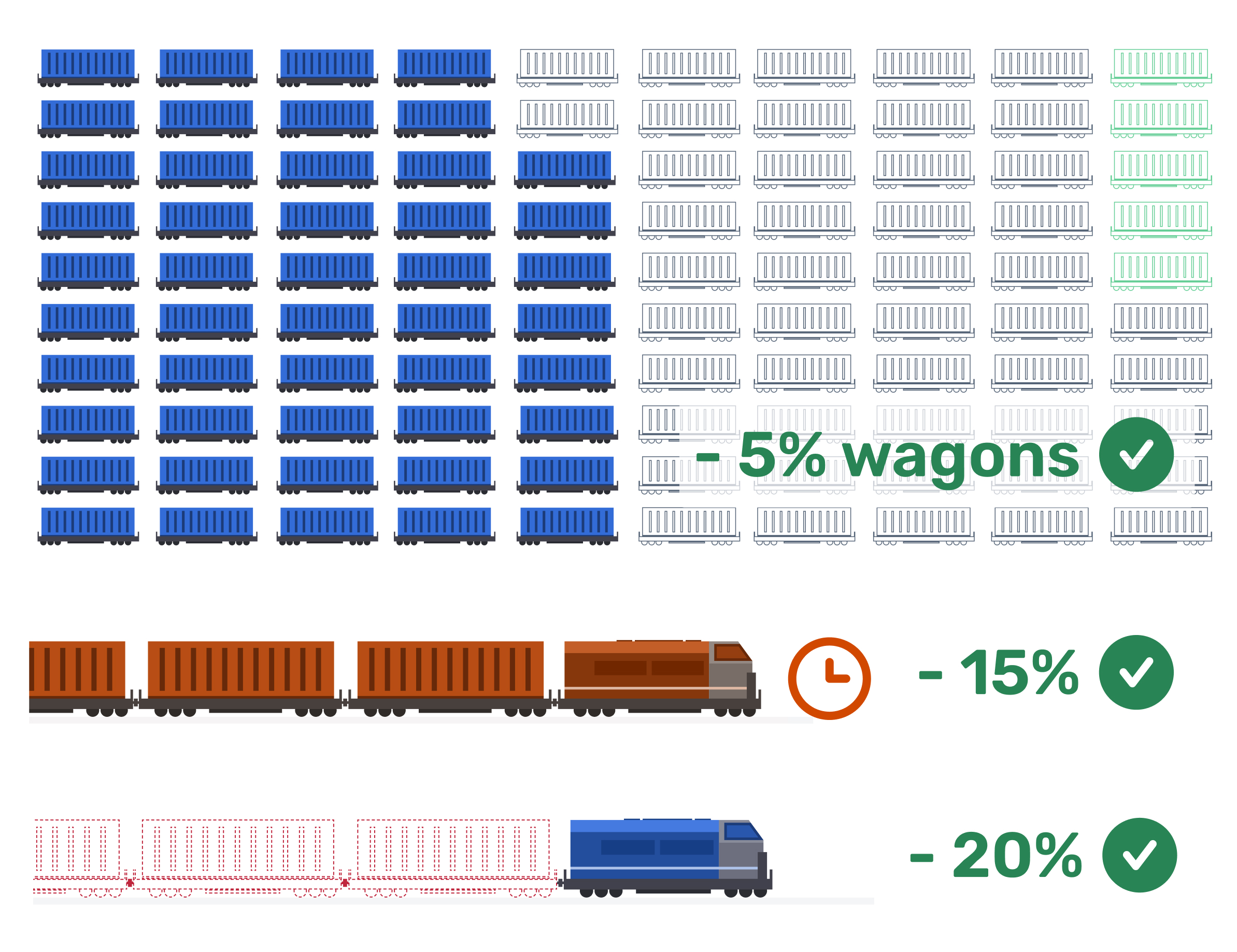
Cutting late cancellations by 15% is the difference between a train that leaves as planned and one that is called off at the dock, week after week.
And cutting dead freight by 20% is the difference between departing 2 wagons short and departing full, on every rotation.
fits the setup you already run
Take it from our clients
Meet the driving forces that transform the rail freight industry


.png)

.png)

.png)


Hesitations?
Let’s clear them up!
Everything you need to know about the Resource Capacity Forecast.
Does SPIF only apply to the automotive industry?
No. It forecasts how much product will be ready to load at a given location on a given day, which applies wherever a train is committed before the goods are confirmed ready. Automotive is a clear case because of minimum vehicle clauses in transport contracts, and the same mechanism applies in steel, chemicals, agribusiness and building materials.
How is RCF different from real-time tracking?
Tracking tells you where a wagon is now. RCF looks ahead: it tells you how many wagons and how much product will be available at each site in the days and weeks to come. It also shows which transports and customers a shortfall would affect, and which options still hold if you act now. Tracking reports the present. RCF lets you plan and arbitrate the future.
Who uses Resource Capacity Forecast day to day?
Transport managers and planners, who use it to build a transport plan on confirmed availability rather than on estimates, and fleet managers, who use it to size the fleet on observed availability rather than on a safety margin. Typical usage is daily, with a small number of users making the arbitration decisions.
Can I test different scenarios before deciding with RCF?
Yes, and that is the real value of forecasting ahead rather than reacting on the day. When a shortfall shows up three weeks out, you can take it and try several responses against it: reschedule the train, change a composition, shift volume between sites, or bring in a spot transport. Each option plays out against the forecast, so you see the effect on the rest of the week before you commit to anything. You keep the version of the plan that holds, and you know why it holds.
Do I need SWIF to use SPIF?
No, they work independently and each answers a different question. In practice they reinforce each other: knowing what will be ready to load matters most when you also know what will be available to carry it.
Can I use SWIF or SPIF without the full Everysens platform?
Yes. Both are available on their own through public APIs that connect to an existing rail TMS, with alerts returned into the tool your team already uses. And if some of the data the forecast needs is not yet flowing from a system, Doc Vault gives you a secure, structured place to bring those documents together, so SWIF and SPIF can run even before every integration is in place. They are also available as part of the full Everysens Rail TMS for teams that want the planning and execution tools alongside the forecast.
What data does RCF need to run?
At minimum, planned transport dates and composition, origin and destination, and current wagon positions. Loading status, wagon damage, maintenance tickets and actual transport dates make the forecast sharper. For SPIF, it also draws on your production plan and incoming flows, along with the loading capacity available per product on the yard and your loading slots.
What if real-time data has not been shared yet?
RCF is designed to work with the data available to you. Real-time feeds make the forecast even sharper, and when they are not in place, it draws on planned dates, planned composition and known wagon positions to give you a dependable view to plan from. You get a working forecast from day one, and it only gets more precise as more data connects.
How accurate is the forecast with RCF?
RCF is built on your real operational data and refreshed every day, so its accuracy improves as it learns your sites and your flows. Like any forecast, it works best when the data feeding it is reliable, and a smaller set of dependable data serves you far better than a large one that is not. From there, RCF gives you a clear view of what to expect across the coming weeks and keeps it current: as conditions evolve, the forecast updates and highlights the transports affected, so you are always planning on the latest picture.
How long does it take to get started?
It depends on how you deploy RCF and on the systems you already have in place. Connected as a standalone forecast to an existing rail TMS, it builds on data that is already flowing, so setup is relatively quick. As part of the full Everysens platform, onboarding covers connecting your flows and configuring each site, which takes longer but sets you up end to end. In both cases, we map the timeline with you at the start and stay involved through go-live, so you know what to expect at each step.
How is RCF different from forecasting in an Excel sheet?
A spreadsheet gives you a snapshot, built by hand, accurate on the day someone updates it and ageing from that point on. RCF pulls your operational data automatically and refreshes the forecast every day, across every site at once. It flags where a shortfall is building and points to the transports concerned, so instead of maintaining the forecast, your team spends its time acting on it.
Go deeper

.png)
.png)