
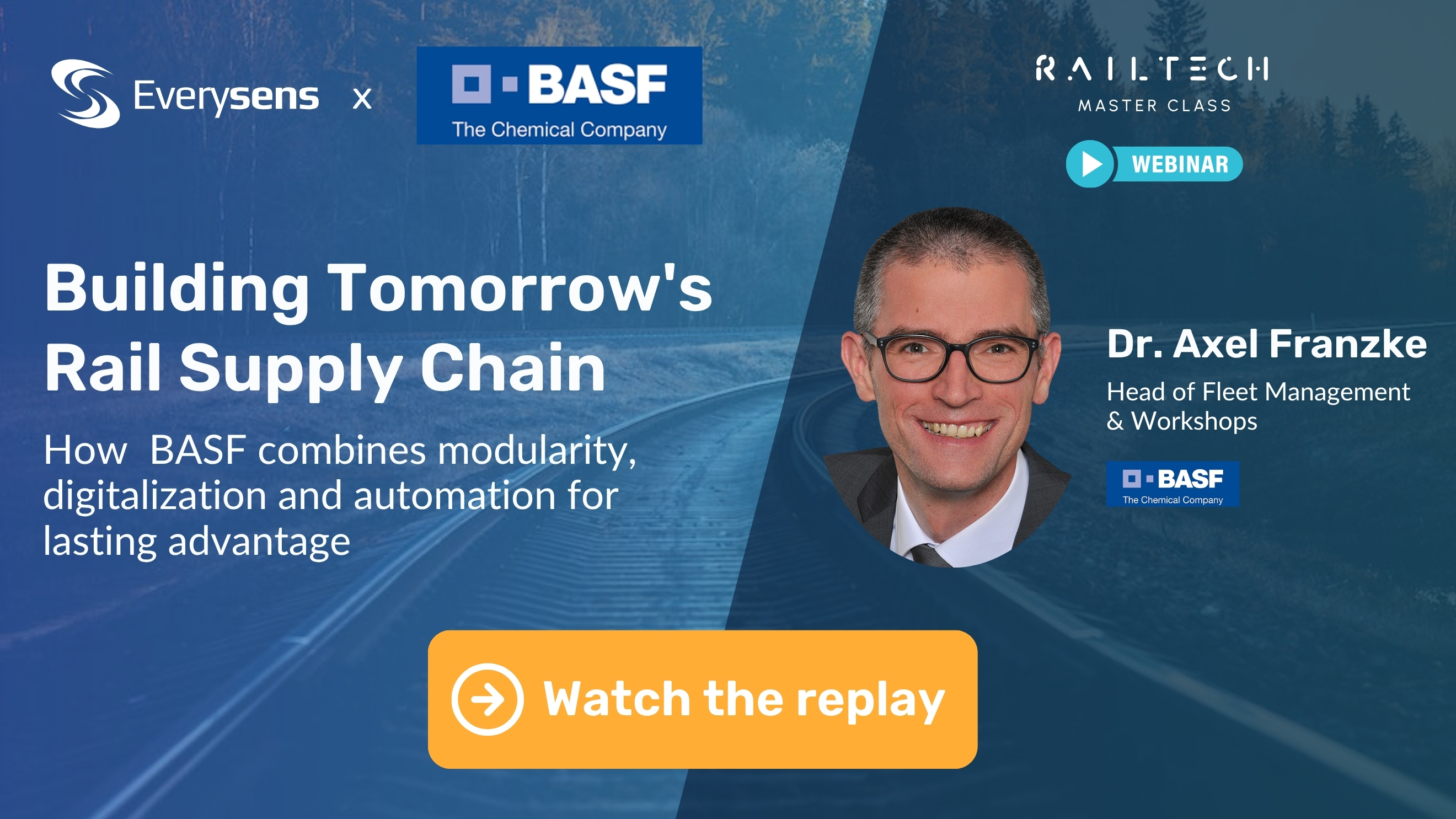
Building Tomorrow's Rail Supply Chain - How BASF combines modularity, digitalization and automation for lasting advantage
Join Dr. Axel Franzke from BASF in this exclusive Master Class to discover how modular systems, digitalization, and automation transformed one of the world's most complex chemical logistics operation, and what it means for the future of industrial supply chains.
Tomorrow's Rail Supply Chain
Rail freight and logistics face mounting pressure: rising costs, sustainability requirements, and operational complexity across European networks. Traditional approaches no longer deliver the agility and efficiency modern supply chains demand.
BASF didn't just optimize current operations, they architected infrastructure that turns disruption into advantage.
At their Ludwigshafen site, Europe's largest integrated chemical complex, BASF pioneered a logistics system combining modular tank containers (BASF Class), fully automated storage, and world-first AGV (Automated Guided Vehicle) operations. The system manages 1,500+ specialized containers across 210 kilometers of rail infrastructure, with full automation since 2018, supporting intermodal transport across Europe.
The strategic value goes beyond current operations. BASF designed their infrastructure to be inherently flexible and scalable, capable of adapting to evolving market demands, new technologies, and changing regulations without requiring fundamental redesign.
In this RailTech Master Class, discover how BASF built supply chain infrastructure that addresses today's challenges while creating lasting competitive advantage.
💡Why This Matters to You
The challenges BASF addresses are relevant across industries:
- Rail equipment costs and utilization
- Inflexibility in wagon allocation limiting operational agility
- Lack of visibility into equipment performance
- Sustainability goals requiring modal shift to rail but needing viable economics
BASF's integrated approach, combining modularity, automation, and digitalization, offers practical insights from implementation at one of Europe's most complex logistics environments.
But there's a deeper strategic question: Are you building for 2025, or for 2030?
The difference between optimization and transformation is infrastructure design: optimization improves today's processes. Transformation builds systems that adapt as conditions change.
BASF's approach addresses both:
- Immediate operational improvements: automated processes, multimodal flexibility, integrated visibility
- Long-term strategic positioning: flexible, scalable infrastructure that adapts as the industry evolves
- Strategic resilience: systems designed to absorb new technologies, regulations, and market shifts
When market conditions shift or new technologies emerge, BASF's modular, digital foundation can evolve rather than requiring complete redesign.
What makes this session unique:
You'll hear directly from Dr. Axel Franzke, who leads Fleet Management and Workshops at BASF Ludwigshafen. With hands-on experience managing complex production operations and now overseeing the logistics fleet, he brings practical insights from both strategic planning and day-to-day execution.
🎙️Session Format
Duration: 50 minutes
Format:
- 20-30 minutes: overview presentation covering modular systems, automation strategy, and operational results
- 10-15 minutes: interactive discussion and Q&A
This is a working session designed for supply chain professionals who want actionable insights from real-world implementation, not theoretical concepts.
🤝Who Should Attend
This Master Class is designed for supply chain and logistics leaders across industries who are:
- Evaluating rail freight equipment digitalization and automation strategies to improve cost efficiency and operational agility while meeting sustainability goals
- Seeking proven approaches to modal shift that deliver both environmental impact and clear ROI, particularly in complex industrial and commercial environments.
- Exploring modular logistics systems and equipment optimization to reduce capital expenditure while increasing flexibility across multimodal transport networks.
- Building the business case for supply chain transformation that balances immediate operational improvements with long-term competitive positioning and infrastructure resilience.
- Staying informed on innovations shaping the future of logistics to understand emerging best practices and technological developments in rail freight and industrial transport.
If you're responsible for rail equipment strategy, logistics optimization, or supply chain digitalization, or simply want to understand where the industry is heading, this session offers strategic insights from one of Europe's most advanced implementations.
📅 May 31st, 2026 | 🕐 11:30am Paris time | 💻 Online Webinar
>> Watch the replay <<
Speakers

Dr. Axel Franzke
Dr. Axel Franzke is familiar with managing the modular tank container fleet, automated storage systems, and AGV operations across Europe's largest integrated chemical complex. With a background spanning R&D, production management, and logistics operations, Axel brings a unique perspective on implementing complex technical systems at scale. Since 2021, he has focused on optimizing the integrated modular logistics system that delivers up to 30% equipment cost savings while enabling unprecedented operational flexibility.